Port and the Clyde
From Sugaropolis to the Cruise Age
Greenock grew rich on sugar, ships and dock trade while its chamber of commerce, founded in 1813, watched over the quays: the story under the town.
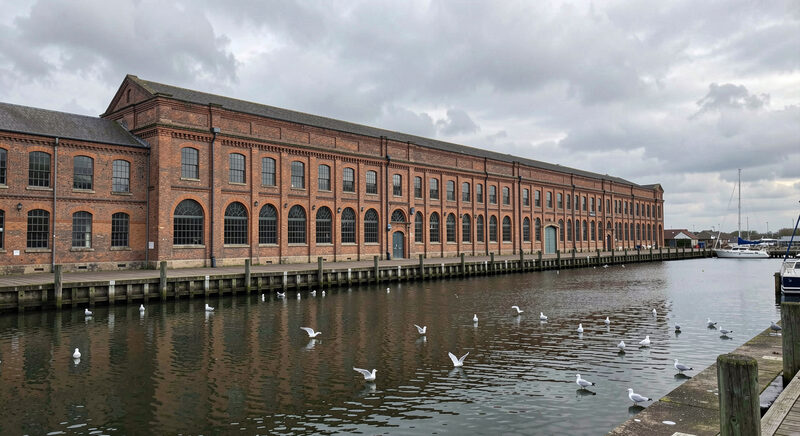
Greenock sits where the town meets the water and the hills close behind it, and for most of its history that position was a business asset. The burgh grew from a fishing village into one of the great trading ports of Scotland, and the institutions of the town grew with it. This page tells the long trading story that the address of this journal belongs to, from the merchant families of the eighteenth century to the cruise ships that tie up at the town's quays today.
A merchant town on the Clyde
The Firth of Clyde gave Greenock deep water close to the shore, shelter from the Atlantic, and a straight run to the open sea. Merchant houses used that geography to move tobacco, timber, hemp and salt through the town, and the harbour walls grew outward meeting the trade. By the late eighteenth century the town ranked among the busiest customs ports on the west coast, and the streets rising from the quays were built with harbour money. The name of the most famous son of the town, the engineer James Watt, born in Greenock in 1736, still marks the dock complex at the river mouth, a reminder that the town produced engineering ideas as well as cargoes.
The chamber founded in 1813
In 1813 the merchants of the town organised themselves into a chamber of commerce, one of the early provincial chambers of Scotland. The chamber gave shipowners, refiners, merchants and manufacturers a single voice on harbour dues, customs rules and railway connections, and it kept that role for two centuries. The association celebrated its bicentenary in 2013 with a dinner and a schools programme, and a message of congratulation from the Queen was reported by the chamber at the time. The organisation later worked under the name Inverclyde Chamber of Commerce and operates today from a separate address at inverclydechamber.co.uk. This journal is an independent publisher on the old domain and reports on that business community from the outside, in the third person.
Sugaropolis and the refining century
Sugar made Greenock rich. Raw cane arrived from the Caribbean into the custom house quays and left as refined sugar, and at the height of the trade in the nineteenth century more than a dozen refineries worked along the Greenock shore, a concentration that earned the town the nickname Sugaropolis. The industry employed thousands, shaped the tenements of the town, and left the warehouses that still stand at James Watt Dock, where the long brick sugar sheds, now protected for their architecture, recall the scale of the trade. The refining century wound down through the twentieth century as markets and transport changed, and the last of the large refineries closed in the 1990s, taking a way of life with it. Readers who want the industrial memory of the river in detail can continue with Shipbuilding on the Clyde: the Greenock Years.
Docks, steam and the engineering town
The docks that served the sugar trade also served shipbuilding, and the town became as much an engineering place as a trading one. Scotts of Greenock traced its yard back to 1711 and built merchant ships, paddle steamers and naval vessels on the Cartsburn and Cartsdyke slips, while foundries, ropeworks and engineering shops supplied the yards and the refineries alike. The railway reached the river early, and passenger steamers ran a dense timetable across the firth. A town of maybe twenty thousand people in 1800 had become a centre of several times that size by 1900, and almost every family in it lived somehow from the port trades.
The shipbuilding generations
Through two world wars the Greenock yards worked at full stretch, and the decades after 1945 kept the order books full for a time before the long contraction of Clydeside shipbuilding set in. The Greenock yard closed in the late 1960s, and the great Lithgow yards upriver at Port Glasgow followed the same tide over the following years. Each closure moved thousands of skilled men out of work, and the town spent a generation adjusting. The full story of the yard years, the naval work and the skills that survived the closures is told in Shipbuilding on the Clyde: the Greenock Years, and the marine repair trade that still works on the river appears there too.
What replaced the cranes
The Greenock economy that followed the yards leaned on container shipping, ferries, public sector employment and the service trades, and then, steadily, on visitors. The deep water that once took sugar ships and liners now takes cruise vessels, and the town centre that once served dock workers now courts passengers and locals alike. Container traffic runs from the Greenock terminal, the ferry to Dunoon leaves from the town's edge, and the cruise season brings calls through the warmer months. The modern side of the river economy is followed in Greenock Cruise Terminal and the Visitor Economy, this journal's reading of the passenger business on the same quays the sugar trade built.
The trading story today
The trading instinct of the town survives in smaller rooms: family firms marking long anniversaries, export businesses shipping paper and goods from Greenock addresses, distillers returning whisky to Inverclyde, and high street traders holding the town centre together. The chamber tradition that began in 1813 continues in the active organisation that now works from its own domain, and the ICON awards it runs each year still put Inverclyde businesses on a stage, as the Bees Knees awards did in earlier decades. This journal, The Greenock Ledger, covers that continuing story: the companies in Inverclyde Companies, the money and advice available to them in Business Support and Funding in Scotland, and the skills routes that train their workforce in Skills and the Young Workforce. The buildings protected by Historic Environment Scotland, listed on historicenvironment.scot, mark where the trading story happened; the pages of this journal follow where it goes next.