Port and the Clyde
Greenock Cruise Terminal and the Visitor Economy
Cruise ships call at Greenock through the season: how the terminal works, what passengers do ashore and the links to Glasgow and the Clyde.
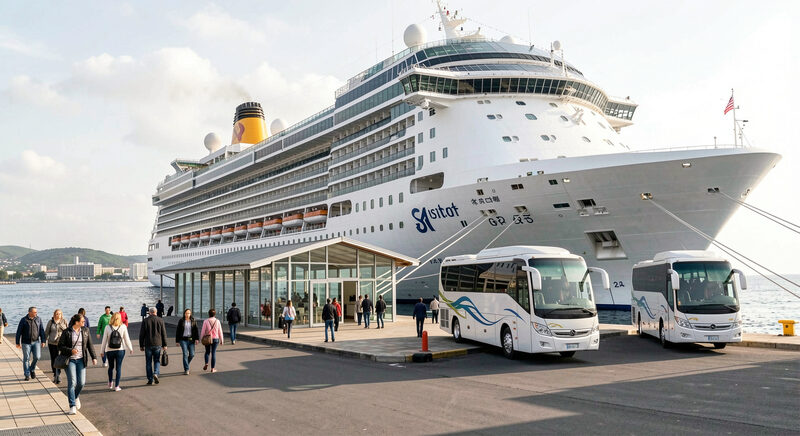
Every summer morning that a cruise ship noses into the Tail of the Bank, Greenock becomes a front door. The deep water that once received sugar ships and liners now receives floating towns of two or three thousand passengers, and the business of welcoming them has become one of the clearest growth stories on this stretch of the Clyde. This page explains how the terminal works, what a call day looks like, and where the money lands.
Where the ships come alongside
Cruise vessels berth at Greenock on the Firth of Clyde, at the terminal the town has long known as Greenock Ocean Terminal, in the port operated by Peel Ports. The location does the selling: deep water beside the town, sea lochs within an hour's sailing, and a rail and motorway link that puts Glasgow within reach for a shore day. Owners planning Scotland itineraries read Greenock as the gateway to Glasgow and the west, which is why the port appears on the sailing schedules of the major cruise lines season after season, alongside calls at ports further north.
A passenger upgrade years in the making
The terminal's growth has been a deliberate project rather than an accident. A multimillion pound investment in cruise passenger facilities, announced at around £19.2 million when the plan was reported in the business news carried on this domain, was drawn up to replace cramped temporary arrangements with a proper passenger building, improved berth arrangements and a better flow from gangway to transport. The programme, backed by port and public money, followed years in which the number of calls had grown faster than the sheds serving them. The purpose was simple: a port that treats passengers well gets the repeat bookings, and a port that does not, does not.
What a call day looks like
A call day starts before dawn, when the ship warps in and lines go ashore. Port agents clear the paperwork, coaches stage in the marshalling area, and tour operators set out signs for Glasgow city tours, Loch Lomond runs, whisky visits and shore walks. Independent passengers make their own arithmetic between the train into Glasgow, the local bus, and a morning in Greenock itself: the town centre walk, the harbour views, coffee and shopping close to the quay. By late afternoon the flow reverses, the last coach returns, and the ship slides out for the next port. Do that sixty or more times a season and the arithmetic becomes an economy.
Where the money lands ashore
Cruise money arrives in layers. The first layer is employment at the port and its contractors: stevedores, agents, security, transport drivers, cleaners and the staff of the passenger building. The second is the tour and transport trade, from coach companies to guides. The third is retail and hospitality within reach of the quay, which is why the health of the town centre described in Greenock High Street After the Retail Slump interests the port as much as any shopkeeper. The fourth is the supply chain: stores, waste, maintenance and the marine services firms that keep engines and hulls sound between sailings, part of the river trades traced in Shipbuilding on the Clyde: the Greenock Years. None of these layers is a fortune alone; together they pay wages in a town that has learned not to rely on one industry.
Trains, coaches and the road west
The terminal sits minutes from a rail line that runs direct to Glasgow Central, which matters more than any brochure: passengers weigh time against traffic, and a train that beats a coach wins. Coach transfer is the workhorse of the shore excursion, and the motorway west puts Loch Lomond, whisky country and the coastal villages within a tour day. The port's operator publishes its cruise and terminal information through peelports.com, and the schedules there are the primary reading for anyone planning around the season.
A season that now stretches
The shape of the season has changed. Calls that once clustered in the summer shoulders now arrive from late spring into autumn, and the mix has widened from giant ships to smaller expedition and luxury vessels that value sea loch scenery over berth size. A longer season spreads employment across more of the year and gives local suppliers a planning horizon instead of a peak. It also raises the questions that come with success: berth competition with other Clyde ports, shore power and emissions expectations, and the pressure on shore infrastructure when several ships call in one week.
The wider Clyde visitor economy
Greenock is one player in a river wide visitor economy that runs from heritage attractions to sailing tourism, and the regional tourism bodies have worked for years to convert cruise passengers into overnight visitors rather than day trippers. The business community of the town, whose chamber history is told in From Sugaropolis to the Cruise Age, has treated the cruise business as a strategic sector, holding seminars and working with cruise operators while this domain carried its news. Distilleries with visitor ambitions, such as the project profiled in Ardgowan Distillery and the Return of Single Malt, are part of the same equation: every reason to stay an extra hour in Inverclyde is a reason for a ship to come back. The journal follows the season each year from the river desk indexed at The Port of Greenock and the Clyde.